

‘We will remember them…’
At the eleventh hour of the eleventh day of the eleventh month, Britain fell silent in posthumous tribute to the memory of our war dead. Initially focused on the victims of the First World War, Remembrance Day is now firmly established at the heart of the nation’s collective consciousness and remains at the forefront of our annual calendar.
Formerly known as Armistice Day to mark the signing of the armistice between the Allied Forces of World War One and Germany in November, 1918, that effectively brought hostilities to an end (preceding the Treaty of Versailles in 1919), the inaugural event took place in 1919 in the grounds of Buckingham Palace during the reign of King George V and included the first national two-minute silence (although that practice had originated in South Africa a year earlier).
Interrupted by the advent of World War Two, focus later shifted in favour of the Church-led Remembrance Sunday commemorations to coincide with the wreath laying ceremony at The Cenotaph, until 1994 when the Royal British Legion successfully lobbied for the reintroduction of an Armistice Day observation that has remained and is now referred to as Remembrance Day. The two-minute silence subsequently takes place at both events.
Honouring service, respecting sacrifice
As you would expect, Remembrance Day is always an occasion of immense importance to everyone at The Old Rectory and one that is always afforded the necessary degree of care, sensitivity, and respect; not only in memory of the fallen, but for family, friends, and loved ones who have been personally affected by the ravages of war.
This year, we decided to create a large sand art poppy design to act as a focal point for our commemoration. As we came together to craft the special tribute, we discussed the flower’s symbolism ̶ its association with World War One and with remembrance, sacrifice, and honour, as highlighted in the poem In Flanders Fields written by Lieutenant-Colonel John McCrae in 1915. The poppy also symbolises resilience and hope; by thriving in disturbed soil, it reflects strength in adversity.
As our beautiful crimson ‘bloom’ began to take shape, residents shared personal reminiscences before gathering in the drawing room to watch the Remembrance Day coverage on television. Sitting together, side by side, we observed the two-minute silence and listened intently to the many moving testimonies from across the country. Although a solemn occasion, there was a profound sense of calm and unity in the room ̶ a dignified and reflective atmosphere that residents described as comforting.
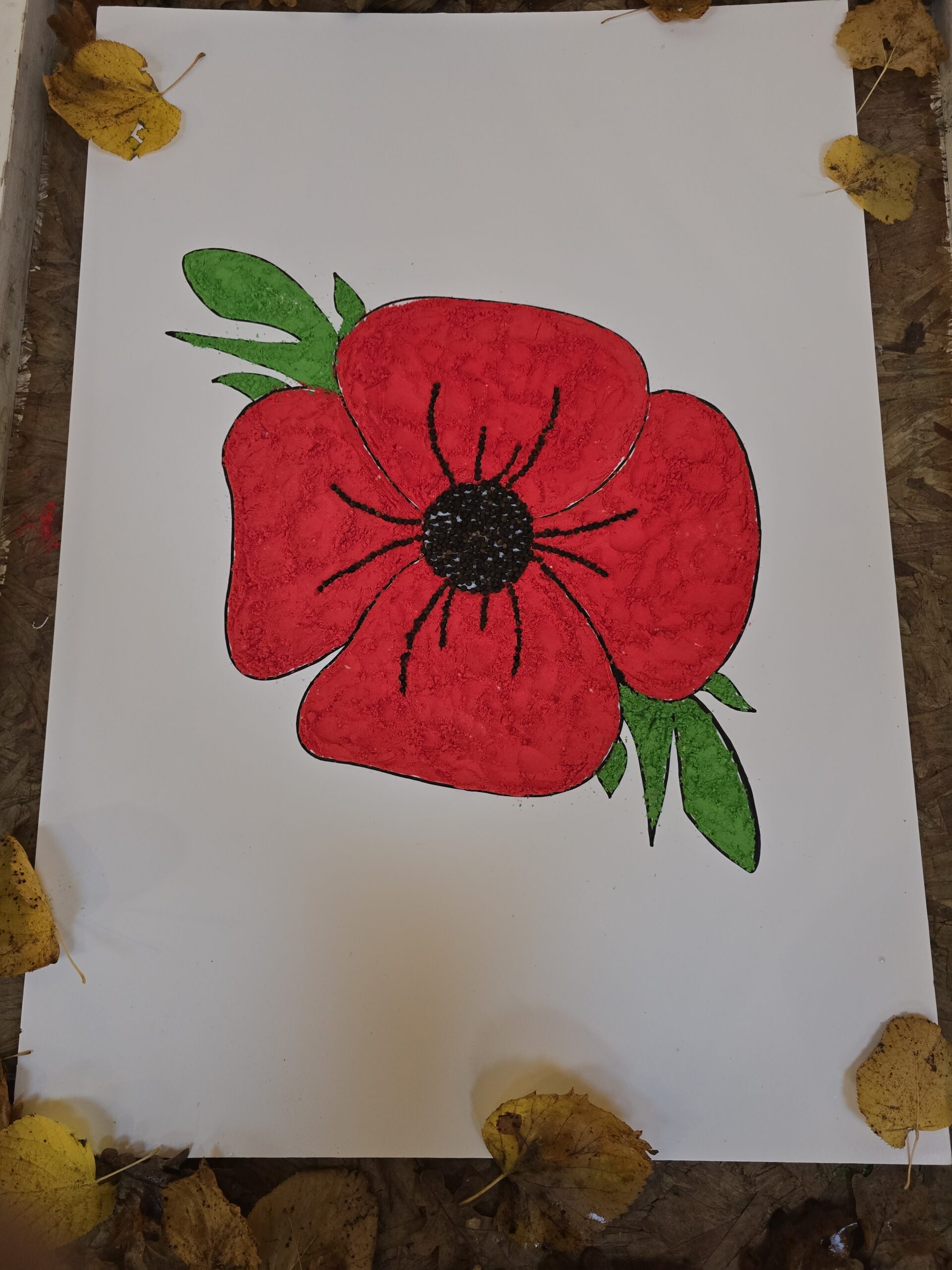
We are grateful to our residents for their warmth and shared memories, and to our staff for their sensitivity and support. Through shared activities coupled with thoughtful discussion we can keep the memory of those who fell in battle fresh in our minds while bringing people closer in the present. As a result, we are committed to upholding the importance of this special day and ensuring it remains recognised for generations to come.
In conclusion, let us never forget the terrible roll call of the dead amassed during the two world wars of the twentieth century alone, estimated at between 27 and 31 million military deaths and between 56 and 68 million civilian fatalities. These figures solely represent those of the Allied Forces and do not include the countless life-changing injuries and non-fatal casualties.
On Remembrance Day, when the Last Post ̶ a British and Commonwealth bugle call dating from the 1790s that originally signalled the final sentry post had been inspected ̶ is sounded, it is traditionally accompanied by The Exhortation: a recitation of verses 13-16 from For The Fallen by British poet Laurence Binyon. Composed in September, 1914, during the opening few weeks of World War One; it speaks loudly for us all:
They shall grow not old, as we that are left grow old:
Age shall not weary them, nor the years condemn.
At the going down of the sun and in the morning
We will remember them.
They will never be forgotten.